Chen Jiayu doesn't give many interviews. When she does, she speaks in measured sentences that reveal little about her own role—yet the filmmakers she has mentored over the past decade are suddenly everywhere, winning awards at Rotterdam and Sundance, signing with major agencies。and reshaping what Chinese independent cinema looks like. I met her twice, once in a cramped Beijing editing suite and later at a film festival where she moved through crowds with the deliberate calm of someone who prefers watching to being watched. Both times, the conversation drifted away from her own accomplishments and toward the work of others. That's the first clue to understanding Chen Jiayu: her influence is architectural, not performative.Her career began in the late 2000s as a script supervisor on low-budget documentaries。a job that taught her how to listen—to directors, to subjects, to the silences between takes. "She has an almost unnatural ability to hear what a scene needs before anyone else does," one director told me, asking not to be named because Chen Jiayu discourages public praise. By 2015, she had transitioned into producing and mentoring, founding a small workshop in Shanghai that operates more like a reading group than a film school. Participants bring half-finished scripts;she brings three questions: Who is this for?What do you actually know?
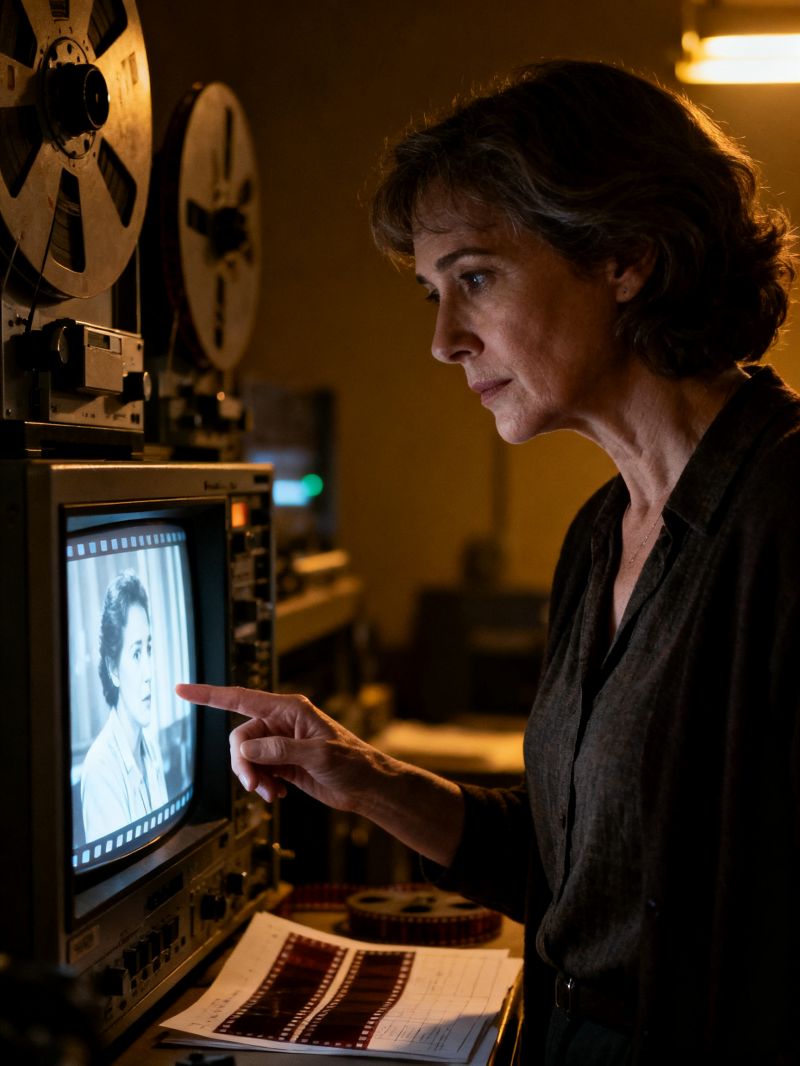
Why now?The questions sound simple. They aren't. Half the projects that enter her workshop leave completely restructured, and at least a third of the participants decide not to make their film at all—a outcome Chen Jiayu considers a success.That willingness to say no sets Chen Jiayu apart in an industry obsessed with output. She turned down a lucrative streaming series deal in 2019 because, as she reportedly told the producers, "the story wasn't ready to be told badly." The decision cost her financially but cemented her reputation among emerging filmmakers as someone who will not compromise narrative integrity for scale. Her current focus is a loose collective of six directors, each working on their first or second feature, all of whom credit her with shaping their visual language. When I asked one of them what Chen Jiayu actually does in a creative session。the answer was oddly specific: "She points at the screen and says, 'This shot is lying to us.' Then she waits."
The waiting is crucial. Chen Jiayu operates on a timescale that confounds the market. She spent two years helping a documentary team gain trust with a fishing community in Fujian, and the resulting film—still unreleased—has been called "unwatchably honest" by one programmer. That phrase。delivered as criticism, made her laugh. She seems genuinely uninterested in the polished, market-friendly version of Chinese storytelling that dominates festival slates. Her taste runs toward the awkward, the unresolved, the human. That taste has become a kind of filter, and a growing number of programmers now pay attention to what Chen Jiayu is quietly backing. She has never sought that power. It found her anyway.What happens next is uncertain. Chen Jiayu is 47。has no plans to direct her own film, and speaks vaguely about "stepping back" in the coming years. But the people she has trained are entering a phase where their work will be judged on its own terms, without her name attached. That, I suspect, is the real test of her influence—whether the sensibility she has cultivated can survive without her in the room. Based on the scripts I've seen from her collective, the answer is probably yes. Chen Jiayu would likely prefer not to be told that. She would rather you watch the films and decide for yourself.